
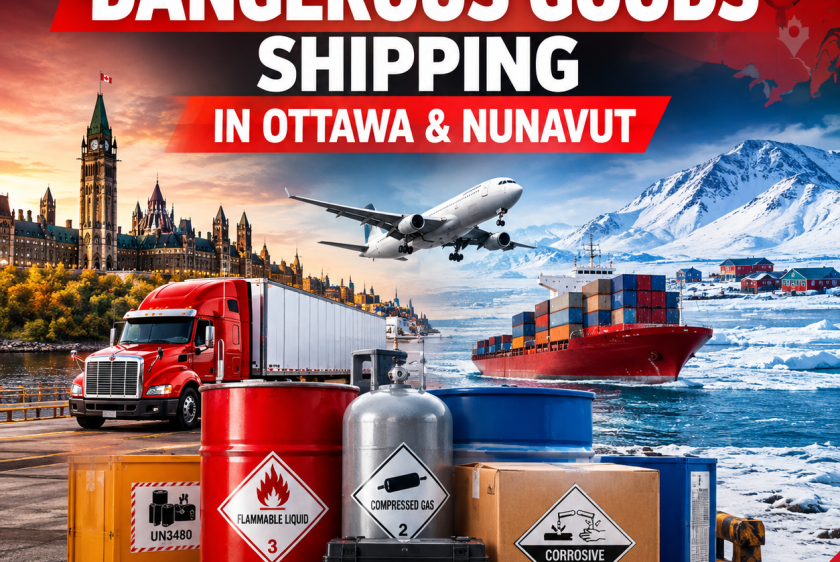
Shipping regulated or hazardous cargo—collectively known as Dangerous Goods (DG)—requires strict compliance, certified packaging, and reliable logistics. Whether you are a tech startup in Kanata North shipping lithium-ion batteries, a research laboratory transporting reagents, or an Arctic operator moving motorized equipment to Nunavut, failing to meet compliance standards can result in costly delays, rejected freight, and heavy regulatory fines.
At Friendship Fast, located at 2295 Stevenage Dr Unit #11, Ottawa, ON, we specialize in full-service dangerous goods handling, UN-certified packaging, Safety Data Sheet (SDS) reviews, and northern air cargo consolidation.
Here is everything you need to know about navigating Transportation of Dangerous Goods (TDG) regulations and why Friendship Fast is Ottawa’s trusted hazmat hub.
Dangerous goods are substances or items that pose a risk to health, safety, property, or the environment during transport. Under Canadian Transportation of Dangerous Goods (TDG) regulations and IATA (International Air Transport Association) rules for air freight, dangerous goods are categorized into 9 hazard classes:
Class 1: Explosives (e.g., flares, construction charges)
Class 2: Gases (e.g., propane, compressed air, acetylene)
Class 3: Flammable Liquids (e.g., gas, solvents, paints)
Class 4: Flammable Solids
Class 5: Oxidizing Substances & Organic Peroxides
Class 6: Toxic & Infectious Substances (e.g., biological samples, clinical reagents)
Class 7: Radioactive Materials
Class 8: Corrosives (e.g., industrial cleaning chemicals, wet batteries)
Class 9: Miscellaneous Dangerous Goods (e.g., lithium-ion batteries, dry ice, motorized equipment like snowmobiles or ATVs containing fuel residuals)
Most standard couriers and freight carriers reject dangerous goods at the terminal due to strict liability rules. A shipment is typically rejected for:
Missing or Incorrect TDG Declarations: Transport Canada and IATA require signed, precise documentation detailing UN numbers, proper shipping names, and net quantities.
Non-Compliant Packaging: Regulated items must be packed in UN-standardized specification packaging designed to withstand pressure, shock, and temperature changes.
Improper Labeling & Hazard Placards: Incorrect hazard class labels or mislabeled net weights instantly halt cargo tendering.
Friendship Fast functions as an end-to-end dangerous goods preparation and staging hub. Instead of forcing you to navigate complex TDG and IATA legalities alone, our Ottawa team:
Evaluates your Safety Data Sheets (SDS) to accurately classify your material.
Repacks cargo into UN-certified boxes and containers.
Applies required hazard class labels and orientation marks.
Prepares and signs all TDG and IATA Dangerous Goods Declarations.
Routes cargo directly via ground freight, air freight (including Canadian North cargo), or seasonal sealift.
Transporting regulated goods from southern Ontario to Nunavut presents unique logistical challenges. Air freight into northern communities operates under stringent IATA safety standards, where even minor paperwork discrepancies can cause cargo to sit stranded in a southern warehouse for weeks.
As a proudly Inuit-owned freight and logistics provider based in Ottawa, Friendship Fast bridges the gap between southern suppliers and Arctic destinations.
Lithium-Ion Power Tools & Electronics: Powering northern construction and tech.
Motorized Equipment: Snowmobiles, ATVs, outboard motors, and dirt bikes prepared for safe air or sealift transit.
Aerosols & Cleaning Compounds: Household and commercial compressed sprays.
Vehicle & Marine Batteries: Lead-acid and lithium batteries requiring Class 8 or Class 9 handling.
Our Stevenage Drive warehouse in Ottawa serves as a primary consolidation point where goods are received, inspected, certified, and tendered for fast northern delivery.
| Industry | Dangerous Goods Handled | Service Provided |
| Tech & Hardware (Kanata) | Lithium-ion batteries (Class 9), prototype hardware | UN packaging, IATA compliance, global/domestic shipping |
| Biotech & Life Sciences | Biological specimens, solvents, reagents, dry ice | Temperature-controlled packaging & rapid lab dispatch |
| Construction & Mining | Compressed gases (Class 2), fuel, solvents | Bulk hazmat staging, sealift prep, Arctic air cargo |
| Northern Residents & Businesses | Power equipment, batteries, electronics, vehicle parts | Local Ottawa drop-off & direct air freight to Nunavut |
Yes. Lithium-ion batteries are classified as Class 9 Dangerous Goods under TDG and IATA regulations. Friendship Fast packages, labels, and certifies lithium battery shipments for safe air transport from Ottawa directly to communities across Nunavut.
No. Friendship Fast supplies UN-certified boxes, absorbent materials, and regulatory hazard labels on-site at our Ottawa facility. We ensure your goods meet all packaging regulations before they leave our warehouse.
Our Ottawa dangerous goods intake hub is located at:
2295 Stevenage Dr Unit #11, Ottawa, ON K1G 3W1.
Don’t let hazardous material regulations delay your business or northern supply chain. Partner with Ottawa’s dangerous goods and northern freight specialists.
Phone: +1 (613) 290-1790
Email: info@friendshipfast.ca
Website: friendshipfast.ca
Visit Us: 2295 Stevenage Dr Unit #11, Ottawa, ON K1G 3W1