
Published by Friendship Fast — Ottawa-based freight and logistics specialists serving Nunavut and Canada’s North.
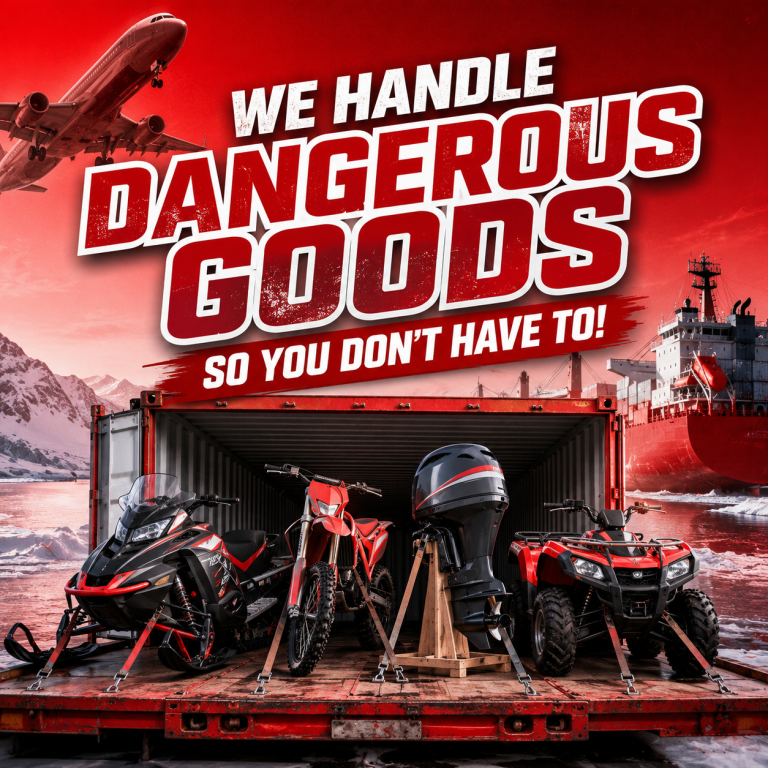
Shipping a snowmobile to Iqaluit? Sending an ATV to a community in the Baffin region? Getting an outboard motor north before the season starts? If so, you’re not just shipping cargo — you’re shipping Dangerous Goods (DG), and that changes everything about how your freight must be documented, handled, and transported.
At Friendship Fast, dangerous goods handling is one of our core specialties. We manage the entire process — classification, documentation, preparation, and compliant transport — so your machine arrives in Nunavut safely, legally, and on time.
Most people are surprised to learn that a snowmobile or dirt bike counts as a dangerous goods shipment. Here’s why.
Gasoline-powered vehicles and engines are regulated under Canada’s Transportation of Dangerous Goods (TDG) Regulations because they contain — or have contained — flammable fuel, and often include installed batteries. Even a “drained” fuel tank retains vapours, which is why these items can’t simply be dropped off like general freight.
That means shipping any of the following to Nunavut requires proper DG procedures:
Ship one of these without proper DG documentation and handling, and the shipment can be refused by the carrier, delayed indefinitely, or result in penalties. In a region where missing a sealift window or a cargo flight can mean waiting weeks — or a full season — compliance isn’t optional. It’s everything.
When you hand your machine to Friendship Fast, here’s what happens behind the scenes:
Every dangerous goods shipment must be correctly classified with the right UN number, shipping name, and hazard class. Vehicles and fuel-powered equipment have specific classifications that must appear accurately on all paperwork.
DG shipments require a dangerous goods declaration prepared by trained personnel. Errors in documentation are the number one cause of refused and delayed DG freight. Our team prepares this paperwork correctly the first time.
Before transport, machines must be properly prepared — fuel levels managed according to carrier and mode requirements, batteries handled correctly, and the unit secured and protected for the rough realities of northern freight handling.
Freight to Nunavut moves primarily by air cargo year-round and by sealift during the summer shipping season. DG requirements differ between air and marine transport — air shipments face the strictest rules. We route your shipment through the right mode based on your timeline, budget, and the season.
From our facility to the final community, we monitor your shipment so you know where your machine is and when to expect it.
Air Cargo vs. Sealift: Which Is Right for Your Machine?
| Factor | Air Cargo | Sealift |
|---|---|---|
| Availability | Year-round | Summer shipping season only |
| Speed | Days | 3-4 Weeks (season-dependent) |
| Cost | Higher, weight-based | Lower per unit for large items |
| Best for | Urgent needs, missed sealift, smaller machines | Planned seasonal shipments, multiple units |
Our advice: If you know you’ll need a snowmobile for winter or an outboard for open water, plan early. Sealift booking windows fill up, and last-minute air freight for a full-size snowmobile costs significantly more. Friendship Fast can help you plan around the shipping calendar so you’re never caught waiting.
Our dangerous goods clients across Nunavut include:
Whether it’s one dirt bike or a full order of outboard motors, the process gets the same careful, compliant handling.
We specialize in the North. Nunavut freight isn’t a side business for us — it’s what we do. We understand the communities, the carriers, the seasons, and the logistics realities of the Arctic.
Trained dangerous goods handling. DG shipments demand trained personnel and correct procedures at every step. Our team handles classification, declarations, and preparation in-house.
End-to-end service. You don’t need to become a TDG expert. Bring us the machine and the destination — we handle the rest: paperwork, preparation, booking, and shipping.
Straightforward quotes. Tell us what you’re shipping and where it’s going, and we’ll give you a clear quote with no surprises.
No. Fuel must be managed according to strict carrier and regulatory requirements before shipping, and the requirements differ between air and marine transport. Friendship Fast handles fuel and battery preparation as part of our DG service.
Cost depends on the size and weight of the machine, the destination community, and whether it travels by air cargo or sealift. Contact Friendship Fast for a quote — we’ll recommend the most cost-effective option for your timeline.
Air cargo typically arrives within days of departure, depending on the community and flight schedules. Sealift operates during the summer shipping season, with transit measured in weeks. Booking early is the best way to control both cost and timing.
No — and in most cases, you shouldn’t. DG declarations must be completed by trained personnel, and errors cause refusals and delays. We prepare all documentation for you.
Yes. Vehicles and motors are our most common DG shipments, but we handle a range of regulated goods. Contact us with the details of your shipment and we’ll confirm what’s possible.
We ship throughout Nunavut, including Iqaluit and communities across the territory. Reach out with your destination and we’ll confirm routing and timelines.
Don’t let dangerous goods regulations slow down your shipment — or worse, get it refused at the cargo counter. Friendship Fast handles the classification, paperwork, preparation, and shipping so your snowmobile, ATV, dirt bike, or outboard motor gets to Nunavut safely and compliantly.
📦 Contact Friendship Fast today for a dangerous goods shipping quote.
Friendship Fast — Ottawa-based freight forwarding and logistics, specializing in shipping to Nunavut and Canada’s North. Safe hands. Northern know-how. Shipments done right.